

Management of maritime projects: how to ensure the success of a shipyard in a marine environment?
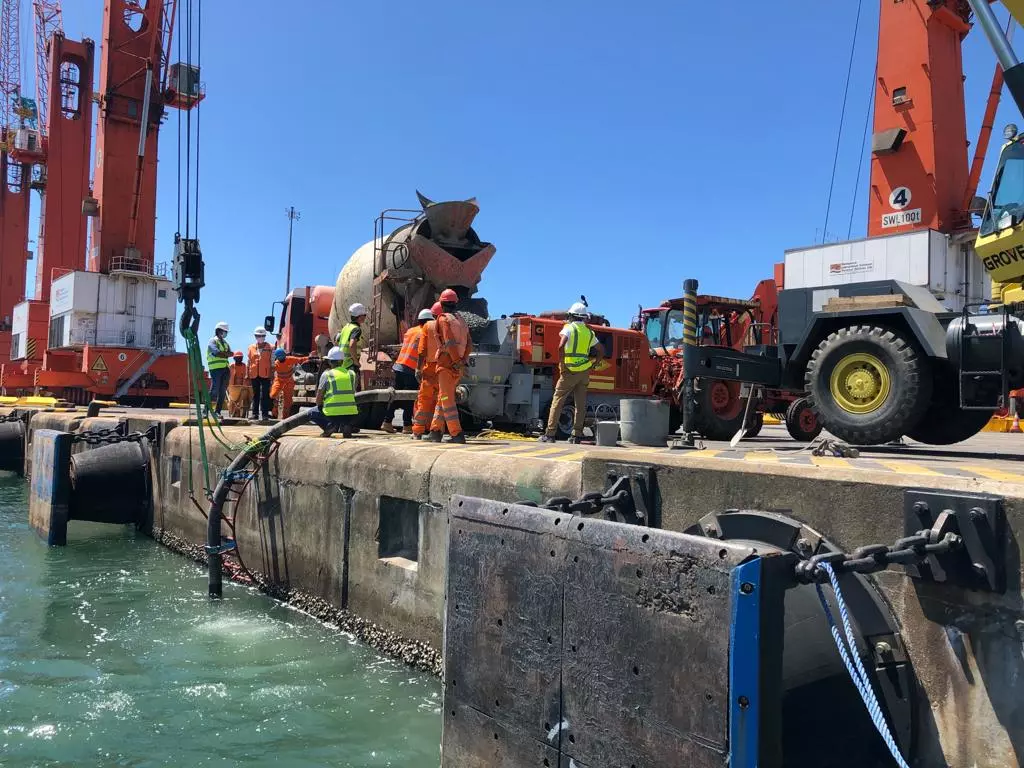
Managing a project in a marine environment requires rigor and expertise that are much greater than those of a land-based construction site. Changing weather conditions, complex logistics, reinforced security: each parameter can influence the success of the project.
At CREOSEA, we support public and private actors in complete management of their maritime projects, from planning to on-site supervision. Here are the keys to a controlled, sustainable construction site that meets the requirements of the marine environment.
Understanding the specificities of the marine environment
Before planning, it is essential to identify the natural and technical constraints specific to the marine environment:
- Weather and tides : planning of operations according to weather windows and tide coefficients.
- Accessibility of work areas : management of nautical resources and coordination of on-board teams.
- Environmental impacts : respect for biodiversity, waste management and regulatory compliance.
A solid preliminary analysis makes it possible to anticipate risks and to define realistic safety margins.
Rigorous and adaptable planning
Planning is the basis for a successful project. In the marine environment, it must be both structured and flexible :
- Define a modular schedule, integrating climatic and logistical hazards.
- Set up daily monitoring thanks to shared reporting tools.
- Coordinate service providers (divers, boatmen, engineers, topographers, etc.) around the same protocol.
Objective: maintain control of the budget and the deadline despite the variability of working conditions.
Safety, the central pillar of the project
Each offshore operation involves specific risks. Success depends on a safety culture integrated from the design of the project :
- Prior Risk Assessment (EVRP).
- Team training and incident simulation.
- Verification of diving or lifting equipment and equipment.
- Establishment of a dedicated security manager on site.
At CREOSEA, each mission is supervised by a strict security protocol, validated before intervention.
The importance of fluid communication between actors
A shipyard often brings together a plurality of actors: project owners, subcontractors, port authorities, state services.
To avoid delays and misunderstandings:
- Adopt a clear governance with identified contact points.
- Centralize information via a shared project management tool.
- Ensure regular and transparent reporting.
Seamless communication reduces the unexpected and builds trust between stakeholders.
Supervision and quality control in the field
The success of a project depends on the effective presence of experts on site :
- Follow-up of operations to verify compliance with studies and specifications.
- Quality controls at each key stage (diving, installation, inspection, lifting).
- Full documentation to ensure traceability and facilitate the reception of the site.
At CREOSEA, our teams combine technical expertise and knowledge of the field to guarantee the conformity and sustainability of maritime structures.
Conclusion: Anticipation is the key to success
The success of a maritime project is based on three pillars: preparation, coordination and adaptation.
By anticipating the constraints of the environment, by establishing fluid communication and by ensuring constant supervision, it becomes possible to deliver a compliant, safe and sustainable construction site.
CREOSEA puts its experience at the service of the performance and safety of your offshore operations.